
How many restrooms does a farm operation need?
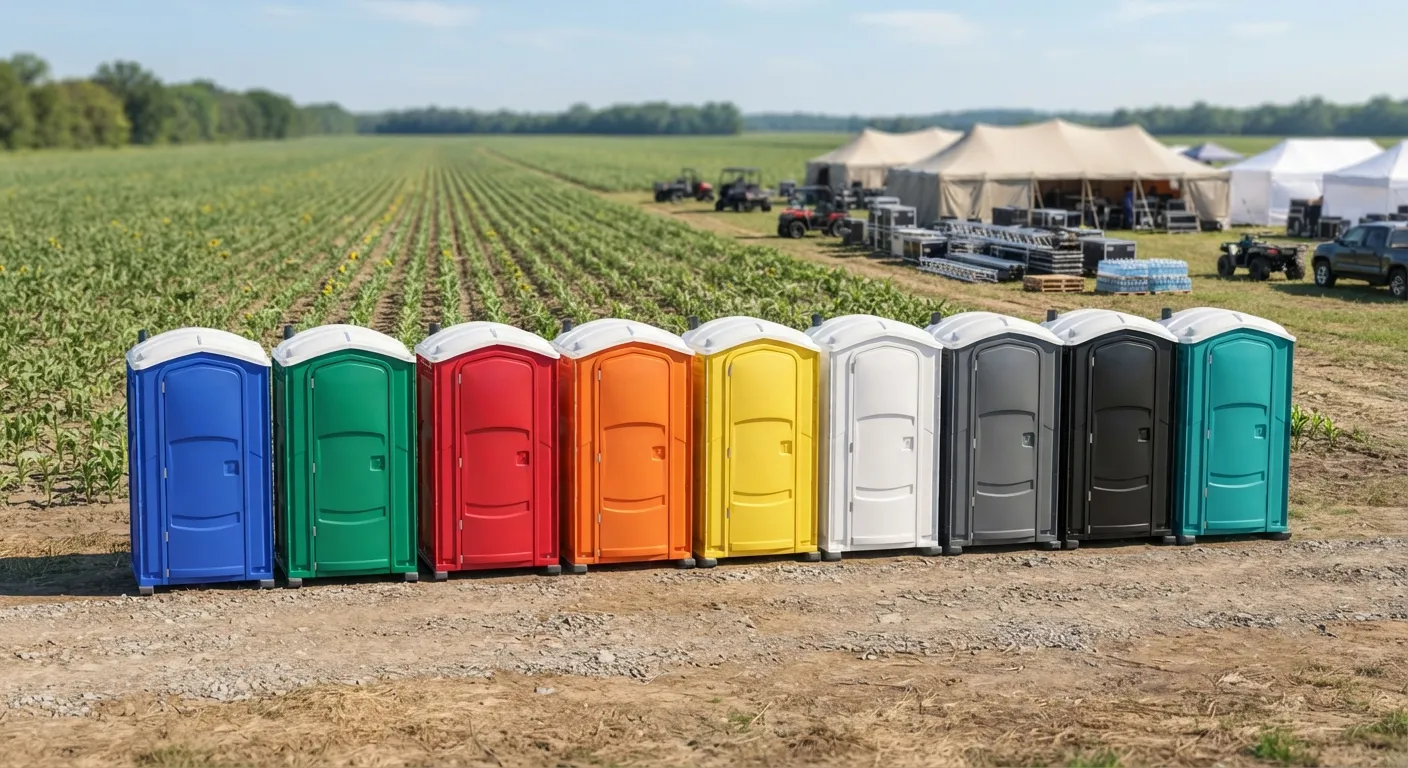
Field sanitation rules exist for a reason: workers picking or packing all day cannot walk half a mile for a bathroom. OSHA 1928.110 sets the baseline at one facility per 20 hand-labor employees, and it has to sit within a quarter mile of wherever people are working, not back at the barn. A standard porta potty rental with a 60 to 70 gallon holding tank covers a crew that size for a full week between visits under the ANSI/PSAI Z4.3 service interval, which assumes up to 10 users over a 40 hour week per unit. Bigger crews mean more units, not longer waits between pumps. If you run several fields across a property in Farmington Hills, you may need two or three placed at different points rather than one central bathroom everybody hikes to. Farms near Farmington, about 2.5 miles south, and out toward Commerce, 12.4 miles northwest, run this same math every planting season. Use the how many porta potties do I need guide to work out unit count against crew size and field layout, and check OSHA portable toilet requirements if you also employ non-field staff, since general construction ratios under OSHA 1926.51(c) can apply to support workers on the same property.
What about handwashing and drinking water?
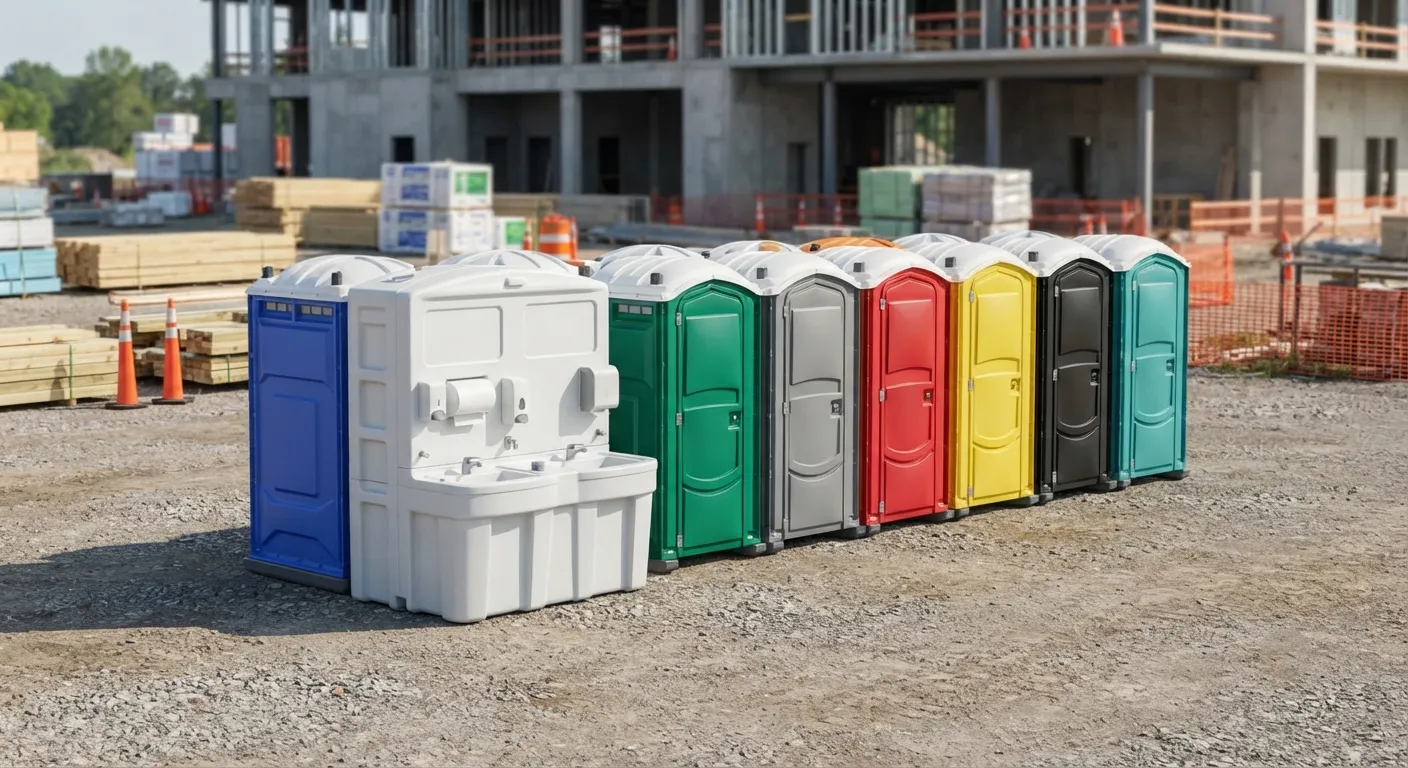
Water and soap are not optional add-ons on a farm site; they are part of the same field sanitation rule that requires the toilets. OSHA 1928.110 calls for potable water and handwashing facilities alongside toilet access, and separately OSHA 1926.51(a)(1) requires an adequate supply of potable water at any place of employment. A handwashing station rental or a portable sink rental satisfies that without hauling jugs out to the rows every morning. If your crew handles pesticide or herbicide application, OSHA 1926.51(f)(1) requires washing facilities specifically for that contact, separate from the general handwashing setup, and under 29 CFR 1910.141(d)(2) those stations need actual soap and towels or a dryer, not just a sanitizer bottle clipped to a fence post. Farms selling direct to the public, U-pick operations especially, often add a hand sanitizer station rental near the checkout stand as a second layer for customers, separate from crew handwashing. Check handwashing requirements before the season starts so you are not scrambling to add stations mid-harvest.
Where should units go on a working farm?
Placement matters more on a farm than almost anywhere else we work in Farmington Hills, because ground gets soft, tractors need turning room and a unit parked in the wrong spot becomes an obstacle instead of a convenience. Put units on stable, level ground near the field edge, close enough to hit the quarter mile rule but clear of irrigation lines and equipment paths. A standard unit runs about 44 by 48 inches on the ground and stands roughly 92 inches tall, small enough to tuck at a row end without blocking a turn radius. If your farm also runs a public-facing event, a fall festival, a corn maze or a market day, pair the field units with something nicer near the customer area; a deluxe flushable porta potty or an event restroom rental setup reads better to paying visitors than a work-site unit. Farms with public access should also review ADA restroom requirements, since ADA Standards section 213.2 requires at least one accessible unit, and never fewer than one, when units are clustered for visitor use. See the full porta potty placement guide for ground and clearance details before delivery day.
| unit | day | week | month |
|---|---|---|---|
| standard | $100 - $350 | $130 - $500 | $125 - $325 |
| ada | $200 - $400 | $240 - $500 | - |
| deluxe | $85 - $1200 | $150 - $290 | - |
Rates vary by how long the season runs and how many units you need at once; the porta potty rental cost page and monthly porta potty rental page break down what drives the difference between a short harvest booking and a season-long lease.
Do I need a permit for a porta potty on farmland?
Placement in the public right of way, or near a road frontage stand, needs confirming with the city before delivery. Farmington Hills has its own rules on this, and we do not guess at them. Check porta potty permit requirements or call the city directly if your unit sits anywhere near a public road.
Can I rent just one unit for a small family farm?
Yes. A single standard porta potty rental covers a small crew or a seasonal roadside stand without needing a full multi-unit setup. Weekly service keeps it usable through harvest, and you can add units later if the season picks up.
How often does a farm septic or holding tank need pumping?
A residential septic tank is typically pumped every 3 to 5 years, depending on tank size and household use. Farmhouses with more people or heavier use may need it sooner. See septic pumping service or how often to pump a septic tank for specifics.
What if my farm sells food and needs a grease trap serviced?
A grease interceptor needs pumping once fats, oils, grease and solids reach 25 percent of the liquid depth, common for farm kitchens or fry stands at a market event. Grease trap pumping covers that separately from toilet service.
Do I need handwashing stations if I already have a sink in the barn?
If the sink is not near the field, it does not meet the field sanitation rule. OSHA 1928.110 requires handwashing access within reach of where people actually work. A portable unit closes that gap; see handwashing station rental for options.
Next step
Get a delivery date
Tell us the address, the dates and the headcount. We size the order and confirm the route.