
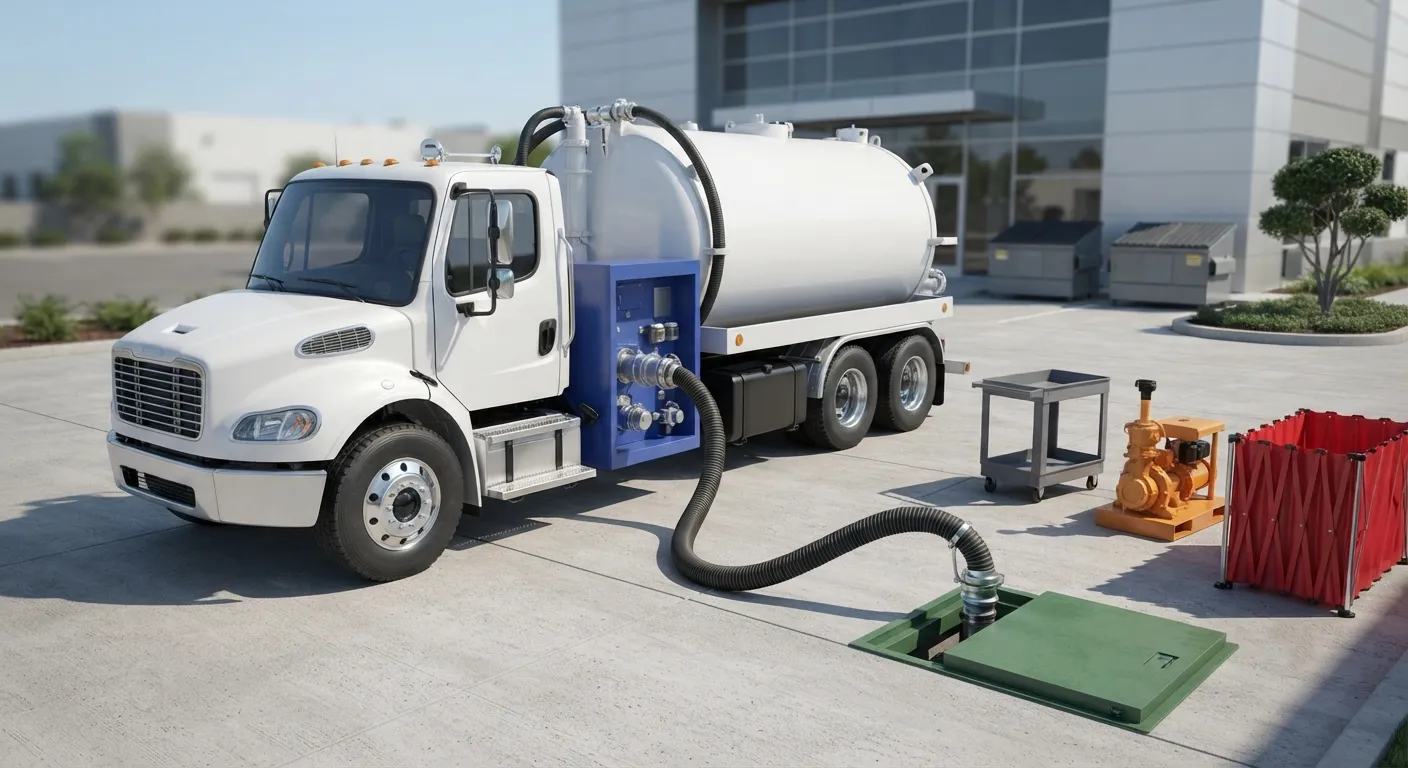
How often does a grease trap need pumping?
The honest answer: it depends on volume, not a fixed date. The 25 percent depth rule is the trigger, and a busy kitchen near a food truck lot or a banquet hall can hit that mark faster than a slow-turn cafe. Farmington Hills Porta Pros checks depth at every visit instead of guessing off a generic interval, the same way a job site works out how many porta potties do i need instead of guessing a headcount. This matters more than most owners think, because a trap pumped too late backs up into the kitchen line, and one pumped too early wastes a service call. If your kitchen shares a lot with dumpster service or you are coordinating construction site services during a remodel, grease pumping should stay on its own schedule, separate from roll-off pickups. Commercial tenants running a septic pumping service alongside a grease line should ask whether both can be scheduled on the same truck run to cut down on separate service fees, and tenants leasing a storage container rental for equipment during buildout can often fold that delivery into the same visit.
What does grease trap pumping cost?
Pricing depends on trap size, access, and how much buildup has to come out, much like porta potty rental cost depends on unit count and duration. Below is the general band for septic-adjacent pump work in Farmington Hills; grease traps priced individually will vary with tank size and grease load.
| service | duration | low | typical | high |
|---|---|---|---|---|
| septic pumping | day | 150 | 250 | 300 |
| septic pumping | weekend | 50 | 100 | 150 |
| service fee | day | 100 | 175 | 300 |
A same-day septic-style call in that day range is common when a trap is already at capacity. If you are budgeting for a full property, compare it against septic tank pumping cost and the general septic pumping service page, since access and drive time factor into both, the same way dumpster rental cost shifts with placement and haul distance. A weekend emergency grease trap pumping call falls into a premium range, similar to weekend septic work, so scheduling ahead saves money over calling in a panic on a Saturday night, the same logic that applies to booking a restroom trailer rental ahead of a weekend event.
Why does grease trap pumping matter for compliance?
A neglected trap does not just smell bad, it backs sewage and grease into the kitchen and can shut down service for a day or more. OSHA 1926.51(a)(1) requires an adequate supply of potable water at any place of employment, and a flooded kitchen floor puts that water supply and the whole workspace at risk. Handwashing after certain contaminant exposure falls under OSHA 1926.51(f)(1), which applies specifically to paints, coatings, herbicides or insecticides, not general kitchen grease, so grease crews rely on standard sanitation practice instead. Under 29 CFR 1910.141(d)(2), washing facilities need soap and towels or a hand-drying device; hand sanitizer alone does not meet that standard, something worth checking if your kitchen also runs a handwashing station rental or a portable sink rental for staff, and worth reviewing against the broader handwashing station requirements page. Farmington is 2.5 miles south of Farmington Hills, and crews covering both areas often bundle grease and septic stops on the same day to keep drive time down, the kind of routing detail covered on the service areas page and the porta potty rental in Farmington, MI page.
How much does emergency grease trap pumping cost compared to routine service?
Emergency calls, especially nights or weekends, run well above a scheduled daytime visit, similar to how septic tank pumping cost spikes on weekend emergency work. Routine pumping booked in advance stays in the standard day-rate band. Ask about emergency septic service if your trap backs up outside business hours, the same way an emergency porta potty rental covers a sudden restroom shortage.
Can grease trap pumping be scheduled with other site services?
Yes. Farmington Hills Porta Pros can coordinate grease pumping with roll-off dumpster rental, portable restroom rental, or temporary fence rental for kitchens mid-renovation. One combined visit often beats separate delivery fees for each service.
Do commercial kitchens need grease trap pumping more often than homes?
Yes, generally. A busy kitchen produces far more grease volume than a residential line, where a typical septic tank gets pumped every 3 to 5 years. Commercial traps get checked and pumped on a much tighter cycle tied to actual buildup, not a fixed year count.
What happens during a grease trap pumping visit?
A technician measures the grease and solids layer, pumps the tank, and checks for buildup along inlet and outlet baffles. Farmington Hills Porta Pros documents the depth reading so kitchen managers can track their own interval instead of guessing.
Is grease trap pumping different from septic tank pumping?
Yes. Grease traps target fats, oils and solids near the surface, while septic tanks handle full wastewater. Some properties need both; see septic tank cleaning for the wastewater side, how often to pump a septic tank for that separate schedule, and septic tank warning signs if you are not sure which one you need.
Next step
Get a delivery date
Tell us the address, the dates and the headcount. We size the order and confirm the route.