
How Do Porta Potties Work On A Job Site?
Picture a construction worker running to a porta-potty between concrete pours. He needs it close, stocked, and not tipped over in the mud. Farmington Hills Porta Pros sets units on level ground near the work zone, usually within a short walk of where crews are working, because OSHA 1926.51(c) sets toilet counts by crew size: one facility for 20 workers or fewer, then more seats and urinals as headcount climbs past 20 and past 200. The tank underneath holds waste until a pump truck arrives, and most single units get serviced weekly under the ANSI/PSAI Z4.3 standard, which sets that interval as the baseline for up to 10 users over a 40 hour week. Busy sites with more crew need more frequent visits or extra units. If you're scoping a job, our guide on how many porta potties you need walks through the math, and the full OSHA portable toilet requirements page covers the ratio table in detail. For general contractors jugging multiple trades, construction site services bundles the toilet order with fencing and dumpsters so nothing gets forgotten.
How Does A Portable Sink Work?
A portable sink runs on a self-contained water system: a fresh water tank feeds the faucet, gravity or a foot pump pushes it through, and a separate gray water tank catches the runoff below. No pipes, no drain line. Soap sits in a built-in dispenser because 29 CFR 1910.141(d)(2) requires soap and towels or a hand dryer at any washing facility, not sanitizer alone. That rule matters more than people think. If your crew is spraying paint, coatings, herbicides or insecticides, OSHA 1926.51(f)(1) kicks in specifically because of those contaminants, and a sink has to be within reach, not back at the trailer. We rent these as standalone units or paired with toilets on the same delivery. See handwashing station rental for the stations themselves, portable sink rental for sink-only setups, and handwashing requirements if you need the rule spelled out for a safety plan. Some sites lean on hand sanitizer station rental as backup, but it doesn't replace the sink under the regulation above.
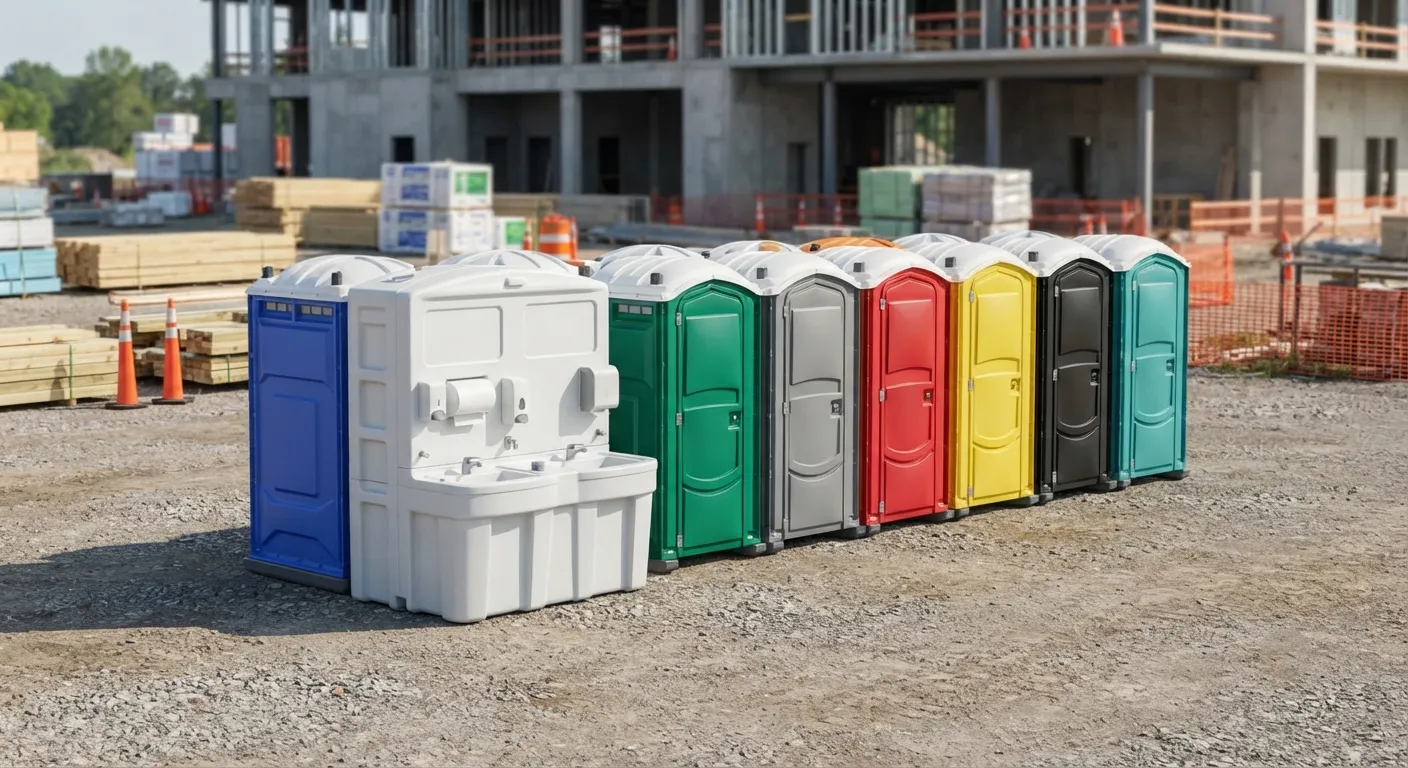
How Do Flushable Porta Potties Work?
A flushable unit, what we call deluxe, uses a small foot-pump or hand-pump flush that pulls fresh water from an onboard tank and pushes it through the bowl into the holding tank below. It feels closer to a bathroom at home. There's a sink built in too, often with hot water, which standard units skip. These get requested most for weddings, corporate events, and anywhere guests expect more than a hole and a seat. Renting one runs on a day or week basis, and pricing scales with how long you need it and how many units the event calls for. For comparison against the standard model, deluxe flushable porta potty rental breaks down what's different, and ADA accessible porta potty rental covers the accessible version, which under ADA Standards section 213.2 has to make up at least 5 percent of any cluster of single-user units, never fewer than one. Farmington Hills event planners booking a tent or stage should also check event restroom rental for count guidance.
How Do Camping Porta Potties Work?
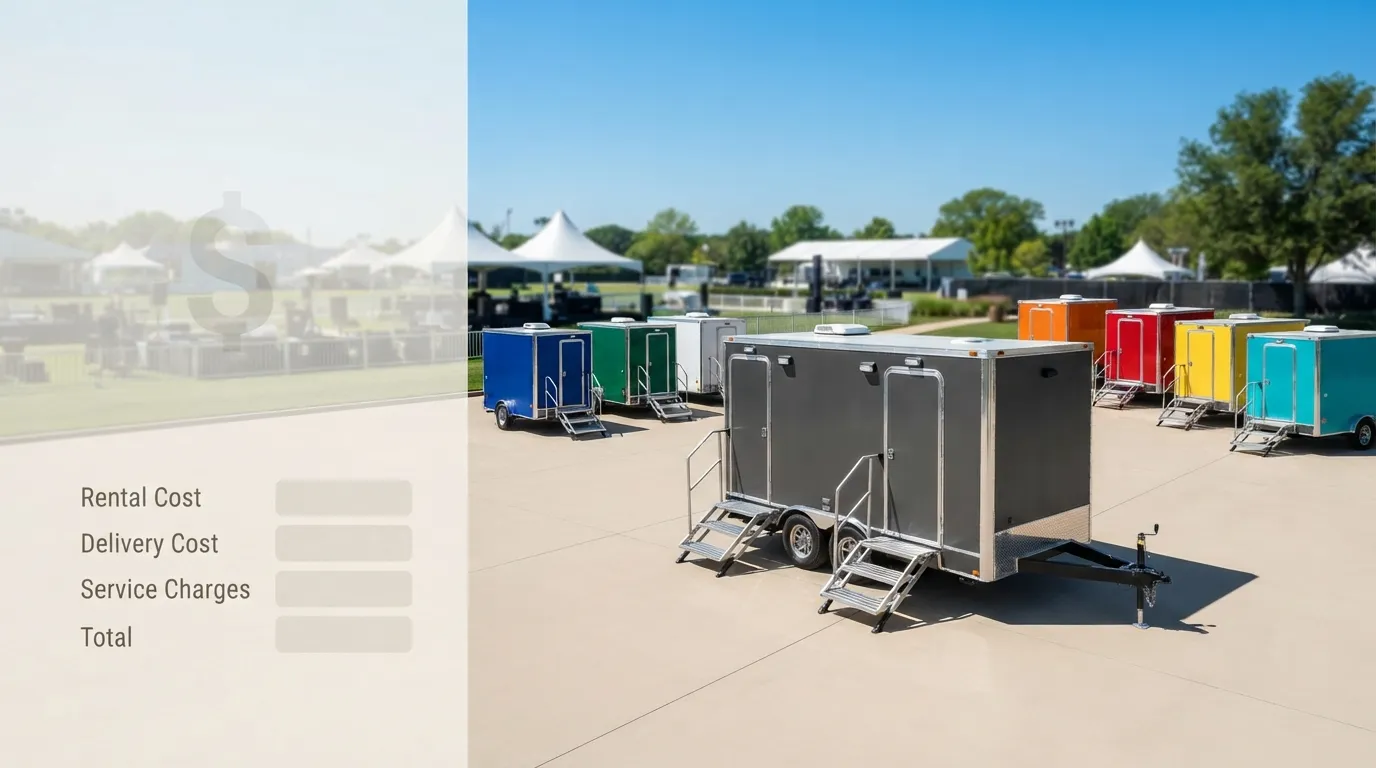
Camping units work the same way as job site units, just smaller and easier to move. The tank still holds 60 to 70 gallons on a standard-size model, and the footprint stays around 44 by 48 inches on the ground, so it fits on a gravel pad or a mowed clearing without much site prep. No power, no water line needed. For a weekend campout or a family gathering, we place the unit, you use it, we pump and remove it. Longer stays just mean a service visit mid-rental instead of a one-time pickup. Camping porta potty rental covers seasonal and weekend bookings, and if you're closer to Farmington, about 2.5 miles south of Farmington Hills, or out toward West Bloomfield, 9.3 miles north, delivery still runs the same day-rate structure. Check porta potty rental per day for that pricing, or porta potty rental cost for the full breakdown across rental lengths.
| unit | day | week | month |
|---|---|---|---|
| standard | $100-$350 | $130-$500 | $125-$325 |
| deluxe | $85-$1200 | $150-$290 | - |
| ADA | $200-$400 | $240-$400 | - |
Do porta potties smell if they're serviced regularly?
Not much, no. The blue chemical breaks down waste and controls odor between pumps, and weekly service under the ANSI/PSAI Z4.3 baseline keeps tanks from filling past capacity. Heat and neglect are what cause smell, not the toilet itself. See do porta potties smell for more.
What chemicals go in a porta potty tank?
A blue deodorizing and digesting chemical, added at setup and refreshed at each service visit. It breaks down solid waste and masks odor between pump-outs. It's not the same product used in a septic tank cleaning chemical treatment at a house, which targets a much larger tank.
How often does a septic tank need pumping compared to a porta potty?
A residential septic tank typically needs pumping every 3 to 5 years depending on tank size and household size. A porta potty tank gets serviced weekly under standard use. Totally different systems, different schedules. Details at how often to pump a septic tank.
Can a porta potty be placed on gravel or grass?
Yes, both work, as long as the ground is level and stable. Grass needs to be mowed short so the unit sits flush. Gravel drains better in wet weather. Our porta potty placement guide covers ground prep in more detail.
Are porta potties ADA accessible?
Some are. ADA units include a 60 inch turning circle per ADA Standards 304.3.1 and a wider door opening than standard units. Under ADA Standards 213.2, at least 5 percent of any cluster must be accessible. Full specs at ADA restroom requirements.
Next step
Get a delivery date
Tell us the address, the dates and the headcount. We size the order and confirm the route.